|
I am pleased to say that the 40 piece challenge has been taken up with gusto by the students. But, just because the younger students seem to be zooming ahead, the more advanced students get more points when they finish a piece. So, the full story won't be known until later! 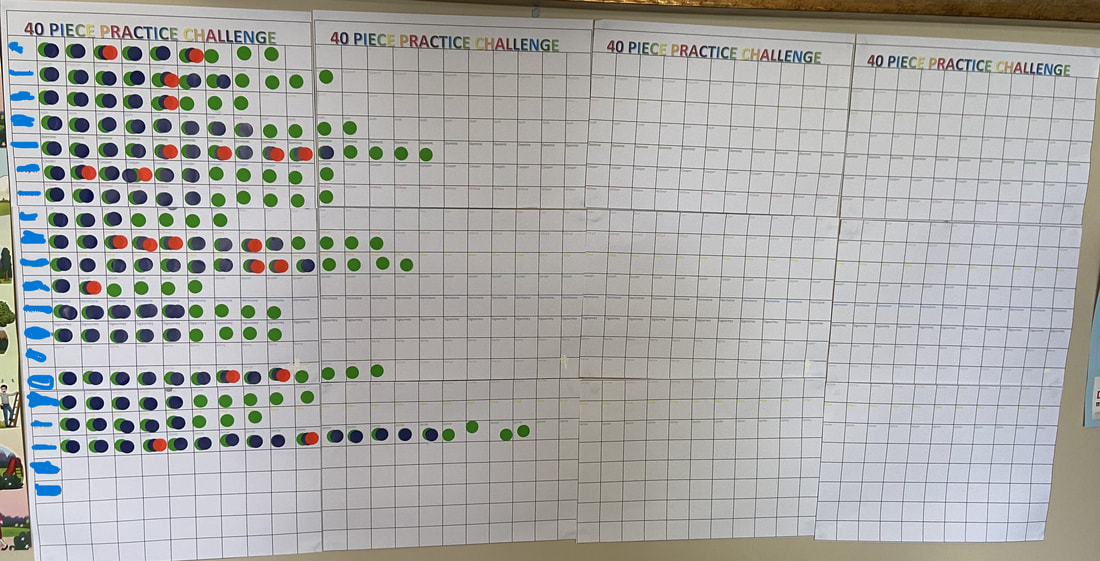
0 Comments
The holidays are just about halfway through already. Doesn't time go quickly. I am in planning mode for the upcoming year. We will have two studio challenges this year.
There will be a Notes challenge in May. The Notes challenge last year was very successful, and we will have another one this year. It will run for 4 weeks in May and will be a different format to last year, probably digitally based. Who doesn't love a computer game?? The other challenge will be based on the 40 piece practice challenge and will run all year until the concert in November. There will be lots of incentives along the way so I'm sure we'll have lots of fun with this too. This term students have been having fun with the jelly bean practice challenge. The more you practice, the more jelly beans you build up in your jar. Only 2 and a bit weeks to go till the end of year recital and the jelly bean jars can be taken home. 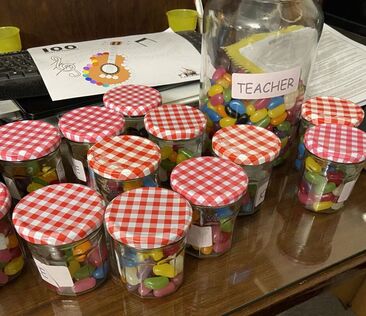 I have some information on the site regarding digital pianos. I recently went around a few stores and tried quite a few digital pianos. I have put together a summary of what I think is a good basic overview of some entry level digital pianos. Let me know if you'd like me to email you a PDF.
We had a very successful recital a couple of weeks ago. I was amazed at how well the students played. What was the best though, was that students were really relaxed and happy to play. We have very informal recitals and the students and guests provide a great environment. Thanks to all students for your hard work, to the parents for providing the encouragement. Not as much would happen without the wonderful input of the parents. Of course, the adult students are also very self motivated, but I did notice that the adults were quite nervous!!
Our first recital for the year is almost here. All students are looking forward to it and putting in some extra practice!
A very common question that parents ask is what age should my child start learning piano?
There is much discussion amongst teachers about this topic. Some like to start children very young – 3 or 4 years old. Others say 5 or 6 years old. And others say not before 7 or 8. Who is correct? Well, there is not one right answer. Everything comes back to the child. So, I’ll try and give a summary of what teachers say. Age 3-4 Some teachers start teaching piano to children who are 3-4. There is necessarily a lot of focus on musical appreciation, musical activities and musical games. These might include moving in time to the music, using hands and feet in time with the music, tapping the beat with a percussive instrument, singing, learning some basic pieces from memory. Students can learn finger numbers, piano alphabets and finding the keys. These activities are often undertaken in a class group of 3-4 students. Parent involvement is a must in that they need to attend the class/lesson, and parents need to spend time at home going over what has been done in class. Some main drawbacks of formal piano lessons at this age are: development of hand dexterity will limit what can be played comfortably; hand strength and co-ordination are not usually adequate; the length of attention span is often short, but this can vary a lot between children; inability to read, which can also vary between children. Age 5-6 A lot more teachers are happy to start teaching piano to children in this age range. 6 is often more preferred than 5. Musical activities can take up more of individual lesson time than formal learning because attention span can still be limited, and the size of the hand and hand dexterity can limit what can be played. By this age students have usually developed a basic understanding of reading and counting. Some 5 years olds can learn to read music before learning to read words. Students will still need a lot of parental involvement. It is very important for parents to attend lessons and to actively supervise practice at home. Age 7-8 This is the preferred age for piano lessons to start for many teachers. Hands are bigger and dexterity is developing. By this age, students are usually reading well, basic maths is understood, the difference between right and left is known, and homework tasks are usually managed well. Concentration ability has increased. Ideally, parental involvement will still supervise practice at home, and make sure the student is practicing what is required. Some students really benefit from this help at home. It is good if the parent sits in on the lesson at least once a term to know how to help the student. Age 9-11 This is also a great age to start learning piano. These students generally progress quickly. Summary 7 to 8 is a good age to start lessons. 5 and 6 year olds should display a high level of interest. Ideally, a parent would sit in on lessons and, be able to facilitate a high level of supervision at home during the week. Many parents prefer to hold their children back from school, and send them when they have turned 6, rather than 5. Many of these arguments will also apply to learning piano. If a child is advanced in musical ability, it does not necessarily correlate to the ability to practice with the attention to detail to obtain the skills and technique required for a higher level of piano. A recital will be held at the end of term 2. Stay tuned for the date.
Term 2 of 2024 is starting next week, beginning Monday 15th April. It's a long term of 11 weeks, making up for the short 9 week first term of the year.
|
About MeLeonie has been teaching piano for many years to students of all ages. Leonie teaches piano for leisure and personal enjoyment, as well as exams for students who would like to do exams. Archives
March 2026
Categories |
 RSS Feed